
On October 8, 2015 the Supreme Court recognized that Department of Ecology cannot use a determination of overriding considerations of the pubic interest (OCPI) to overcome water law as codified by the first in time, first in right doctrine.
Foster v. Ecology is a case that involves a challenge to a water right permit issued by DOE to the City of Yelm. The DOE decision authorized water withdrawals that exceeded minimum flow requirements. This authorized withdrawal impaired senior water right holders. DOE recognized that this authorization impaired minimum flows, but rationalized that under the OCPI, allowing the authorization was allowable. DOE acknowledged that even with mitigation to lower the impacts of this authorized withdrawal, the Yelm permit would impair minimum flows, which in essence impairs senior water right holders. Even after acknowledging the impairment, DOE argued that the authorized withdrawal would have a “net ecological benefit” despite the loss of water resources. The DOE director looks to WAC 173-563-080 to determine what an OCPI actually is. Said WAC states, “Consideration of the public interest by the director of the department of ecology shall include an evaluation of all uses of the river and its impact on the state of Washington. The uses to be considered include, but are not limited to, uses of water for domestic, stockwatering, industrial, commercial, agricultural, irrigation, hydroelectric power production, mining, fish and wildlife maintenance and enhancement, recreational, thermal power production, and preservation of environmental and aesthetic values and all other uses compatible with the enjoyment of the public waters of the state.”
The Supreme Court’s majority saw through this novel interpretation of water law and went back to basics. Water law in Western States is really pretty simple, first in time, first in right. DOE has been doing end runs around this doctrine by using a test that DOE drafted. The Supreme Court has previously declared that the OCPI exception is quite narrow and cannot be used to issue appropriations, but can be used to issue withdrawals in certain situations. Earlier the Supreme Court looked at OCPI under the Swinomish case, where the Supreme Court looked directly at Washington’s water statutes and case law in determining the scope of DOE’s authority to use the OCPI exception to impair minimum flows. In the Swinomish case the Supreme Court looked at our State’s long-established approach to water law which follows “prior appropriation” and “first in time, first in right” doctrines. Washington water law does not permit any impairment, even one that is minimal, to a senior water right. Minimum flows are established by administrative rule and have a priority date as of the rule’s adoption. Withdrawals of water are permitted to impair minimum flows only under narrow OCPI exceptions and DOE cannot widen that narrow exception with a three part test of their own making which would allow for DOE to use the OCPI exception to reweigh or reallocate water in Washington.
In the Foster case DOE issues the permit to the City of Yelm pursuant to RCW 90.54.020(3)(a), which allows DOE to authorize withdrawals of water that impair minimum flows where it is determined that overriding considerations of the public interest are established by the applicant, here the City of Yelm. Foster then appealed DOE’s decision to the Pollutions Control Board (PCHB), which affirmed DOE’s decision, then appealed again to the trial court which also affirmed DOE’s authority to issue the permit. The Supreme Court then used their decision in Swinomish to analyze the statutory provision written into RCW 90.54.020(3)(a) which allows for DOE to issue a permit where said permit is negatively impacting the base flows or minimum flows necessary by simply stating it is in the consideration of public interest. As the Supreme Court stated in Swinomish, this is narrow exception and cannot be used to permanently impair senior water rights with earlier priority dates. The Supreme Court has the power to invalidate any agency rule or order the exceeds the agency’s statutory authority. The Supreme Court must look to legislative intent and give the plain meaning to ordinary statutory language and technical meaning to terms of art to determine if DOE exceeded their authority under RCW 90.54.020(3)(a). The Supreme Court in Foster determined that DOE did exceed their authority with the issuance of the permit to the City of Yelm.
Washington water law is concerned with injury caused by impairment of senior water rights. DOE does not get around the protections written in water law by claiming ecological injury, by using a test under OCPI that DOE drafted themselves. DOE was told by the Supreme Court that water law is supreme in this state and will continue to be so. WCA is a grass roots organization that has policy on its books to support decisions such as this one that uphold water rights.
Category Archives: Uncategorized
Water law update
This has been a good week in water law, first with the Washington Supreme Court ruling in the Foster v. DOE case where the Supreme Court recognized the importance of “first in time, first in right” and the “prior appropriations” doctrines on Oct 8. As of today, we have a favorable ruling on WOTUS. The 6th Circuit just issued a nationwide stay on WOTUS. This is a very positive step for water rights. See more below:
Foster v. Ecology
Court cancels water right permit for city of Yelm
Ruling to guide Ecology in future water right decisions in water-short basins
OLYMPIA – The Washington Supreme Court has reversed the state Department of Ecology’s decision to issue a water right permit to the city of Yelm to meet community water needs anticipated from future growth.
In a 6-3 decision issued today in Foster vs. Ecology the court determined Ecology erred in approving the permit because it will impair minimum stream flows in the Deschutes and Nisqually basins. Ecology had conditioned approval on an extensive mitigation package to offset the water use from the permit. Mitigation included retiring existing water rights, habitat protection and stream restoration.
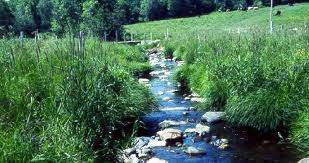
Yelm resident Sara Foster appealed Ecology’s decision to issue the permit to the state Supreme Court after it was upheld in Thurston County Superior Court.
The case has statewide implications because the court determined Ecology unlawfully applied “overriding considerations of public interest” (OCPI) in making its decision. Ecology uses OCPI as a tool to approve water right permits when water availability is limited, but it appears the public benefits of approval outweigh any impacts on stream flows.
“We are taking today’s ruling under advisement and we will assess what other water management tools we may use in the future to make decisions on complex water needs in water constrained basins,” said Ecology Director Maia Bellon.
Brand Inspection Rules
With fall coming on and many people selling their weanlings, whether they are horses, cattle, or other livestock, it is very important to know what the rules in your state are on brand inspections. Our WSDA has a page on what the rules in WA are. Make sure to check and see if you need a brand inspection prior to shipping your livestock.
http://agr.wa.gov/foodanimal/livestock/inspectionrequirementsandfees.aspx

AG & WATER QUALITY ADVISORY COMMITTEE MEETING SEPTEMBER 29, 2015
The regular meeting of the AG & WATER QUALITY ADVISORY COMMITTEE MEETING was called to order on September 29, 2015 at the DOE office in Union Gap.
A three-fruit presentation was made to start the meeting on the efficiencies and changes in the tree-fruit industry. This was followed by an update on the non-point source plan, which DOE submitted to the EPA to receive 319 program funds and meet CZARA requirements. EPA told DOE they were lacking in the following areas to receive 319 funds:
a. Target and meet water quality standards as established by DOE.
b. Set minimum standards but provide flexibility.
c. End product must be implementable on the ground, as in their procedures must be something that can actually done and standards accomplished.
This is not a new regulation. The process requires feedback from stakeholders and needs to be science based. BMPs must be science based. Outreach to begin January 2016 with the draft process to spring 2016 and finalized by summer 2016 to be submitted to the EPA/NOAA during the summer.
Contact Ben Rau at DOE for any input. DOE agrees that NRCS standards must be included, as they are tried and true. The 319 funds and CZARA will be lost if a non-point plan is not in place. No time-line to finalize the non-point plan has been established. Once the draft is done, it will be submitted to EPA. EPA will not pull 319 funds if DOE continues to move forward and work on the deficiencies they had in their plan.
One of the main issues we wanted to discuss at this meeting was the DOE Complaint Response System where DOE encourages the public to report environmental problems, meaning encourages the public to report anything that they feel does not look right. DOE then will be forward the complaint to the appropriate staff members. Those persons reporting the problems can remain anonymous. DOE staff will verify problem existence using site conditions and watershed evaluations. If an actual problem is identified, technical and financial assistance will be offered. Clearly those of us on the DOE Advisory Committee found flaws in this system. The main one being that DOE thinks it is a positive that people can remain anonymous during the process. This allows neighbors to turn in neighbors, whether right or wrong. It also allows this system to be used as a tool when there are problems in a neighborhood. Clearly this system can easily be abused. DOE stands by their decision to allow persons to remain anonymous. The Committee also told DOE that DOE should request to contact the complainant to explain the details of any problems revealed or if nothing is found to be wrong, why. This may lead to people making informed complaints versus opinion based complaints. Clearly WCA feels there are strong issues with this complaint based system, specifically with complainants being allowed to remain anonymous. The Committee asked for more information. This subject will come back up again at a future meeting.
One of the other topics that all WCA members should be paying attention to is the CAFO permit process. A pre-draft draft has been published and WCA has made comments to this pre-draft draft. Clearly the CAFO permit is nowhere near being complete. DOE stated that some of the main issues they are trying to address are as follows:
1) Address ground water concerns;
2) Make permit proactive rather than reactive; and
3) The nutrient management process is burdensome and needs to change.
The main goal of a CAFO permit is to protect ground and surface water issues. There were still questions that need to be answered by DOE on their position to many segments of the CAFO permit, such as, if there is a lagoon, does DOE consider said lagoon to discharge automatically into groundwater? Should buffer strips be implemented in all CAFO permits? Will the public have access to all CAFO information? Have flexible will the permit be? There are still lots of questions in this process that need to be answered for cattlemen everywhere. A formal draft for public comment is to be created by January 2016.
Yakima County Commissioner Rand provided a GWMA overview stating that nitrate contamination has been found in the groundwater in Yakima County, of which reduction of this contamination is necessary. A model is being developed to determine the source of the contamination. This has been going on for some time. GWMA works directly with DOE.
Ginny Prest with WSDA gave a presentation on Nutrient Application training. Some of the issues that come up during the training are:
1) When, Where, and How much manure can be applied and still protect water quality?
2) The curriculum is to include agronomic application, risk analysis, record keeping methodology, irrigation water management and feed management.
3) The start date to develop the Nutrient Application Training to include the above questions and training materials is October 2015, with the completion date of development of the training slated for December 2016, meaning classes should start soon after.
Next Meeting: The next meeting to be located in Olympia on December 9, 2015.
Coming up:
1. Nitrate Prioritization Report: Nitrate contamination and geology
2. CR101 – developing bacteria standard for recreational contact
3. Follow-up to watershed analysis and prepare for 2016.
Yes, the fun continues. Jack will be attending the next meeting in my place and will probably give a more fun filled rendition of what happened.
D.C. Court Victory Will Lead to Reduction in Wild Horses
The Western Resources Legal Center (WRLC) on behalf of the California Cattlemen’s Association, California Farm Bureau Federation, Public Lands Council, National Cattlemen’s Beef Association, Modoc County, and ranchers William Flournoy, Carolyn and James Peter Carey, and Mike Byrne won a significant victory in Federal court in Washington D.C. this week involving wild horses competing with livestock on the Modoc National Forest in northern California. The court soundly rejected the wild horse activists’ attempt to increase the acres dedicated primarily to wild horses, including private lands, and to leverage wild horse overpopulation to increase forage allocated to wild horses to the detriment of livestock.
In 2014, the wild horse population in the Devils Garden wild horse territory on the Modoc was estimated at being 400-700% overpopulated. Plaintiffs challenged a long delayed Forest Service management plan that revised horse population management levels and corrected the boundaries of the horses’ territory that incorrectly included private property and other inappropriate Forest Service land. WRLC argued that the revised horse population management levels were far more than enough to provide a “thriving natural ecological balance,” under the Wild Free-Roaming Horses and Burros Act of 1971.
“While the activists’ goal was to leverage the Wild Horse Act to increase wild horse use and reduce domestic livestock use,” said Dustin Van Liew, Public Lands Council executive director, “The court maintained that the wild horse management decision by the Forest Service is not a suitable vehicle to dispute livestock grazing permits.”
The opinion stated, “Plaintiffs may disagree with the Forest Service’s decision to adjust the [horse population] range instead of modifying grazing permits and livestock management plans,” but the National Environmental Policy Act (NEPA) “is not a suitable vehicle for airing grievances about the substantive polices adopted by an agency, as NEPA was not intended to resolve fundamental policy disputes.”
The court affirmed the Forest Service’s horse levels and had no heartburn about the ratios of cows to horses, “So the fact that there are private cattle and sheep grazing in the Devil’s Garden WHT consuming much more forage than the relatively small number of wild horses, is not on its own incompatible with the Act.”
The court also found no improper conduct involving a cost share agreement between the Forest Service and the local Farm Bureau to prepare the wild horse management plan, rejecting the allegation that the agreement biased the wild horse plan in favor of livestock producers. The Forest Service had long delayed the wild horse management plan which was needed to support removal of excess horses.
Finally, the court ruled that the wild horse territory cannot be extended beyond the area occupied by the horses in 1971, when the Act was passed.
Washington State Beef Contributes BILLIONS to WA economy
WSU Study Reveals the Beef Industry’s Impact on Washington State’s Economy
Until now, little has been known about the economic importance of Washington’s beef industry to the state’s economy. A research project was conducted by Washington State University’s School of Economics on behalf of the Beef Commission and funded by the Washington Cattle Feeder’s Association and Farm Credit Services. According to that study, the process of transforming cattle into beef in Washington State contributes $5,690,728,928 annually to the state’s economy.To review the study in detail, click here.
Union Gap DOE Advisory Meeting
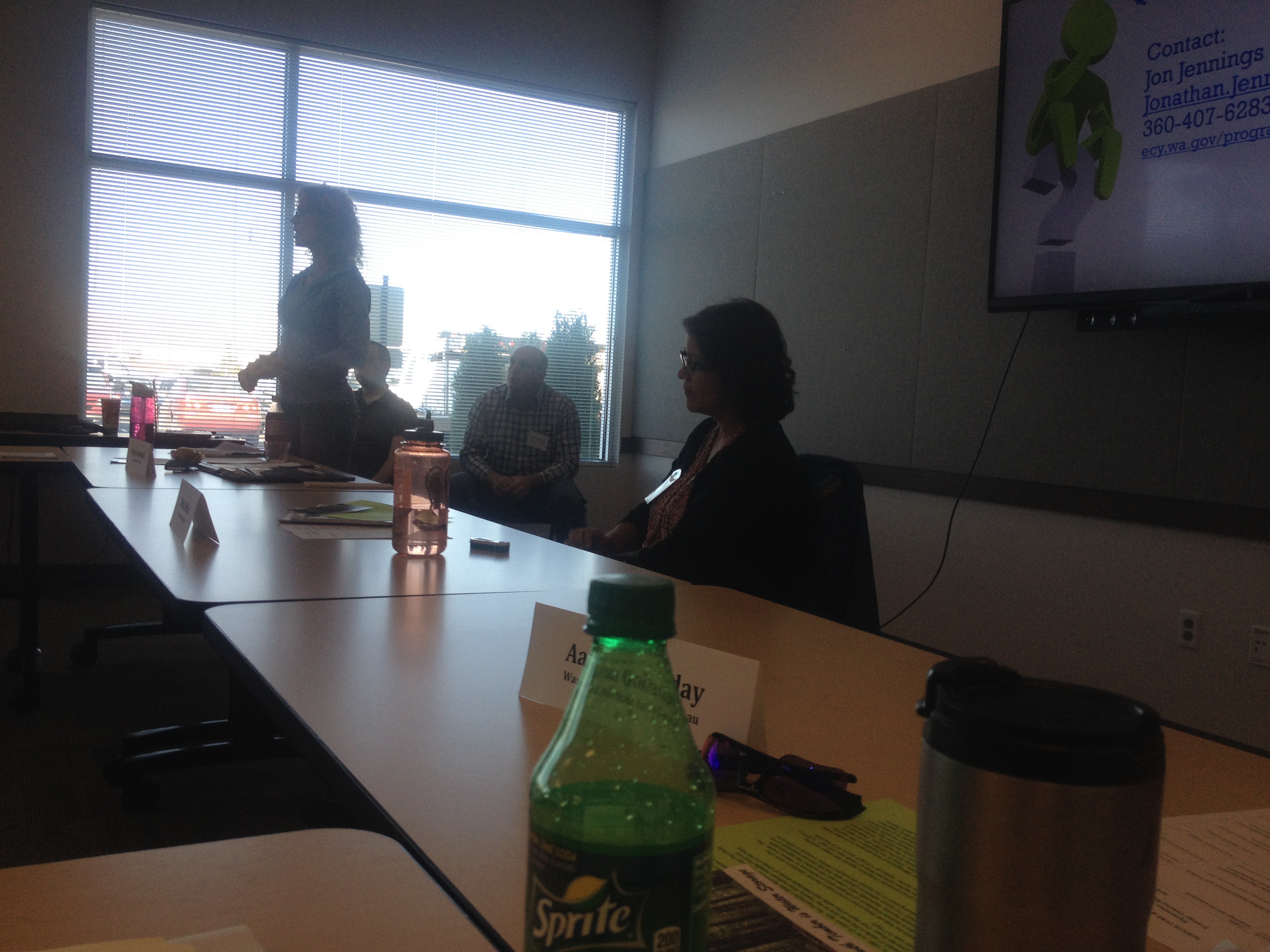
Union Gap DOE Advisory meeting was yesterday. This a picture of Heather Bartlett of DOE discussing the upcoming CAFO permit. We had a good turnout for the meeting yesterday with many new faces in the audience. There are lots of issues for this group to discuss and the work continues.
Softening Land Values
Farmers National has a really good article on land values. There has been talk about softening commodities and their impact on land values. Rents have softened a bit, but in our area, we are still seeing land asking prices stay strong. We may see some lower prices, but not today.
Judge vacates listing of lesser prairie chicken
Posted by Steve Davies on September 2, 2015 .
A federal judge in Texas has removed Endangered Species Act protections for the lesser prairie chicken, which was listed as threatened last year (Permian Basin Petroleum Association v. Dep’t of the Interior, MO-14-50, W.D. Tex.). | FWS press release on listing | FWS LPC page
Specifically, U.S. District Judge said that the Fish and Wildlife Service “failed to properly apply its [Policy for Evaluation of Conservation Efforts When Making Listing Decisions (PECE)] to its evaluation of the [Rangewide Plan] resulting in material error. This caused FWS to arbitrarily and capriciously list the LPC as a threatened species.”
The Center for Biological Diversity has issued a press release, in which CBD endangered species director Noah Greenwald said, “This court decision has no basis in law. Christmas came early this year for the oil and gas industry with a court decision specially gift wrapped for them straight out of Midland, Texas.”
 Toni Meacham Attorney At Law