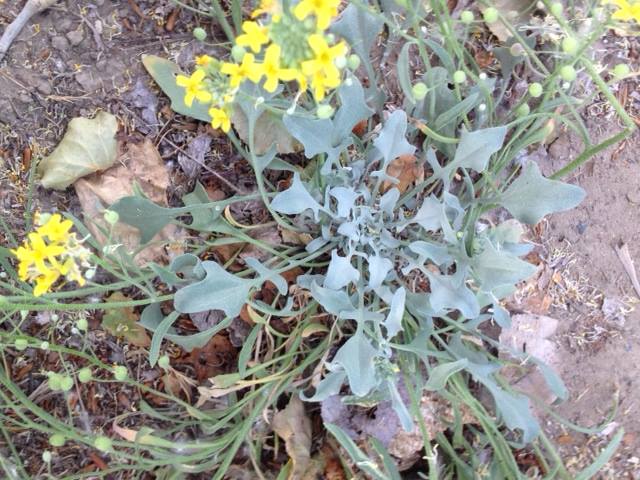
White Bluffs Bladderpod.

Help request- for all of you along rivers or streams, please keep your eyes open for bladderpods. If you see a population, please let me know so we can have someone come check it out. Specifically looking for this plant along the Snake River into Idaho and Montana. Bladderpods need to look similar to the White Bluffs Bladderpod.

Bladder Pod

Honesty

Your counsel can only prepare for any circumstance if he/she knows all of the facts. Normally, surprises are going to harm your case not help it. Your attorney is there to assist you, so divulge all information pertaining to the situation. Your attorney may ask you questions that you do not think are relevant or that you might think are personal, but remember, they are there to ensure that you have the best outcome.

imagesL3GOPKLY

Act in a timely Fashion

gg61049176If you find yourself in a sticky situation, whether you need legal counsel or just advice, the sooner you seek help the better off you will be. The longer you wait the longer the opposing counsel has to build a case against you or maybe just for some documents to get lost. Typically, your counsel will need time to review the case.

Have a Question and Answer session

Make sure you are comfortable with your attorney and that they can explain the legal lingo to you if you do not understand it. Any attorney who cannot or will not take the time to answer your questions clearly and accurately is not to be trusted.

edy-cartoon-business-woman-tutorials1

New Rules over waters and wetlands

Once again the Federal government is trying to expand their jurisdiction, this time over waters and wetlands. EPA and the U.S. Army Corps of Engineers have published in the Federal Register a previously announced Proposed Rule to “… define ‘waters of the United States’ … for all sections of the Clean Water Act to mean: traditional navigable waters; interstate waters, including interstate wetlands; the territorial seas; impoundments of traditional navigable waters, interstate waters, including interstate wetlands, the territorial seas, and tributaries, as defined, of such waters; tributaries, as defined, of traditional navigable waters, interstate waters, or the territorial seas; and adjacent waters, including adjacent wetlands … Specifically, the proposed rule clarifies that under the Clean Water Act: … Most seasonal and rain-dependent streams are protected; Wetlands near rivers and streams are protected; Other types of waters may have more uncertain connections with downstream water and protection will be evaluated through a case specific analysis of whether the connection is or is not significant … The proposal requests comment on options protecting similarly situated waters in certain geographic areas or adding to the categories of waters protected without case specific analysis … The proposed rule preserves the Clean Water Act exemptions and exclusions for agriculture … The proposed rule will be open for public comment for 90 days from publication in the Federal Register. The interpretive rule for agricultural activities is effective immediately …” For anyone that is interested, that means it is time to comment to the Feds that this proposed rule is unacceptable. Expanding their jurisdiction means more laws to deal with and more ag ground out of production. Please take the time to comment. I am not an NCBA member, but they are going to have a comment link for this rule at beefusa.org it is not up as of this moment, but should be up in the next day or so. This rule will impact anyone with property, so please comment.

images

Remember, Honest is the best Policy

gg61049176

Remember, honest is the best policy and your counsel can only prepare for any circumstance if she knows all of the facts. Normally, surprises are going to harm your case not help it. Your attorney is there to assist you, so divulge all information pertaining to the situation. Your attorney may ask you questions that you do not think are relevant or that you might think are personal, but remember, they are there to ensure that you have the best outcome.


Avvo Rating has increased to “9.0”!

Avvo logo
Dear Toni,

Congratulations! Your Avvo Rating has increased to “9.0”! If you haven’t done so already, download your Avvo Badge and show off your rating on your own website.

This badge dynamically updates every time your rating changes, and serves as a direct link back to your Avvo profile.

Get the Avvo Rating Badge

Thanks for participating on Avvo,

The Avvo Team

Your Avvo Rating Badge

Badge top
Badge left 9.0 Badge right
Badge left Superb Badge right
Badge middle
Badge left Featured Attorney Badge right
Badge bottom
Your Avvo Account
View Profile | Answer Questions
Marketing Solutions
Avvo Ignite | Advertising | Avvo Websites
Read Our Blogs
Lawyernomics | Avvo Blog

Basics of a 1031 Continued

imagesE8YPHIQT
To meet the requirements of §1031, both Relinquished Property and Replacement Property must qualify. In other words, both the property you are selling and the property you are buying must be qualified property of like-kind. If not, your exchange will fail and be classified as a sale.
The Internal Revenue Code requires that you identify your potential replacement properties within 45 days of the closing on the sale of your relinquished property. The 45 days are calendar days, so if the 45th day is Sunday, Labor Day or the 4th of July, that day is still the deadline for identification of new properties. There are no extensions allowed.
Basics of a 1031 Continued Will Continue tomorrow.

Basics of a 1031

gg61049176
I have been working on 1031 exchanges for many years. Here are the basics of a 1031-

The key advantage of a Section 1031 exchange is the ability to sell a property without paying any capital gain tax, or depreciation recapture at closing, which allows the earning power of the deferred taxes to work for the benefit of the investor.

Although Section 1031 refers to “an exchange of property”, it does not require a simultaneous “swap” of properties. A Qualified Intermediary “QI” is an entity who enters into a written agreement with the taxpayer (“exchanger”) to acquire the exchanger’s rights and/or ownership interest in the property the exchanger is selling (“relinquished property”), and transfer such ownership interest into one or more properties of “like-kind” that the exchanger chooses to buy (“replacement property”). A QI is required by tax law and provides a safe harbor for the taxpayer (exchanger). I use Custom 1031 in Spokane as the QI for almost all 1031 exchanges that go through my office.

In other words, the intermediary is “assigned in” as the seller of the property during the closing process. It is the assignment that allows the seller to become an exchanger and, essentially convert an otherwise taxable sale and subsequent purchase of investment real estate into a tax-deferred exchange.

Because the intermediary is technically the seller who receives the sale proceeds, it prevents the exchanger from being in “actual or constructive receipt” of the proceeds; thus, there is nothing to tax.

This Post will be Continued tomorrow.