 |
|
|
|
|
|
||||||||||||||||||||||||||


|

|
|
|
|
|
|
||||||||||||||||||||||||||
|

The 3-Property Rule – You can identify up to three potential replacement properties without regard to fair market values of the properties.
The 200 Percent Rule – You may identify any number of properties as long as their fair market value does not exceed 200 percent of the total fair market value of all Relinquished Property (ies).
Section 1031 requires that you purchase one or more new properties by the 180th day after the closing of the old property. You must purchase one or more properties on your 45-day identification list.
This is a very simplistic break-down of 1031 exchanges, but will help you to understand the basics and to understand if a 1031 is right for you.


I have been working on 1031 exchanges for many years. Here are the basics of a 1031-
The key advantage of a Section 1031 exchange is the ability to sell a property without paying any capital gain tax, or depreciation recapture at closing, which allows the earning power of the deferred taxes to work for the benefit of the investor.
Although Section 1031 refers to “an exchange of property”, it does not require a simultaneous “swap” of properties. A Qualified Intermediary “QI” is an entity who enters into a written agreement with the taxpayer (“exchanger”) to acquire the exchanger’s rights and/or ownership interest in the property the exchanger is selling (“relinquished property”), and transfer such ownership interest into one or more properties of “like-kind” that the exchanger chooses to buy (“replacement property”). A QI is required by tax law and provides a safe harbor for the taxpayer (exchanger). I use Custom 1031 in Spokane as the QI for almost all 1031 exchanges that go through my office.
In other words, the intermediary is “assigned in” as the seller of the property during the closing process. It is the assignment that allows the seller to become an exchanger and, essentially convert an otherwise taxable sale and subsequent purchase of investment real estate into a tax-deferred exchange.
Because the intermediary is technically the seller who receives the sale proceeds, it prevents the exchanger from being in “actual or constructive receipt” of the proceeds; thus, there is nothing to tax.
This Post will be Continued tomorrow.

I am also the executive director of the Washington Agriculture Legal Foundation were I strive to help the ranchers and farmers protect their land and livelihoods. As well as, a member of the; Washington Bar Association, Benton-Franklin Bar, Benton-Franklin Young Lawyers Bar, American Quarter Horse Association, American Angus Association, American Hereford Association, United Braford Breeders, Washington Cattlemen’s Association, Franklin County Cattlemen’s Association and the Nation Foundation Quarter Horse association. I served as a director for the United Braford Breeders. I am a sponsor of the Franklin County Cattlemen’s and the Cattle Producers of Washington. I enjoy being an active member of the community and helping fellow farmers and ranchers.
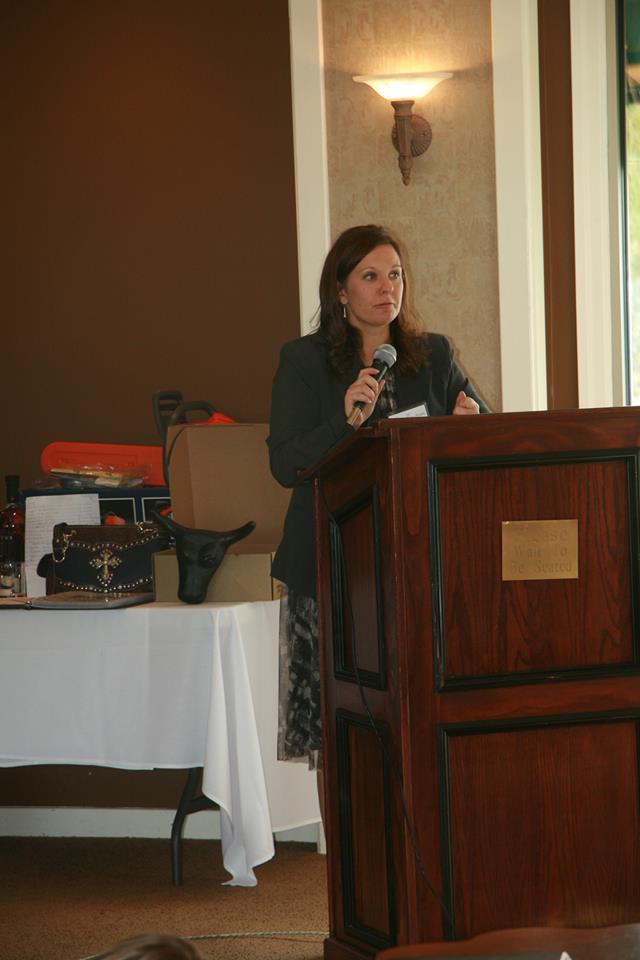
I had the opportunity to meet with Dave Spetch, who is an advisor for generation based family businesses and President of Advising Generations, LLC. Dave has moved to the Columbia Basin and is a great asset for those family based businesses that need extra help in planning beyond the attorney and CPA. Dave has been published in Successful Farming magazine and has spoken at the NCBA meeting. For more on Dave go to davespecht.com

https://tonimeacham.com/in-the-news/
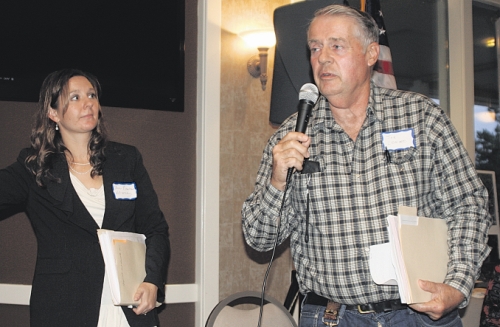
Matthew Weaver/Capital Press
Attorney Toni Meacham looks to rancher Joe Lemire during an update on Lemire’s upcoming case before the state supreme court at the Cattle Producers of Washington annual meeting Oct. 26 in Moses Lake, Wash.
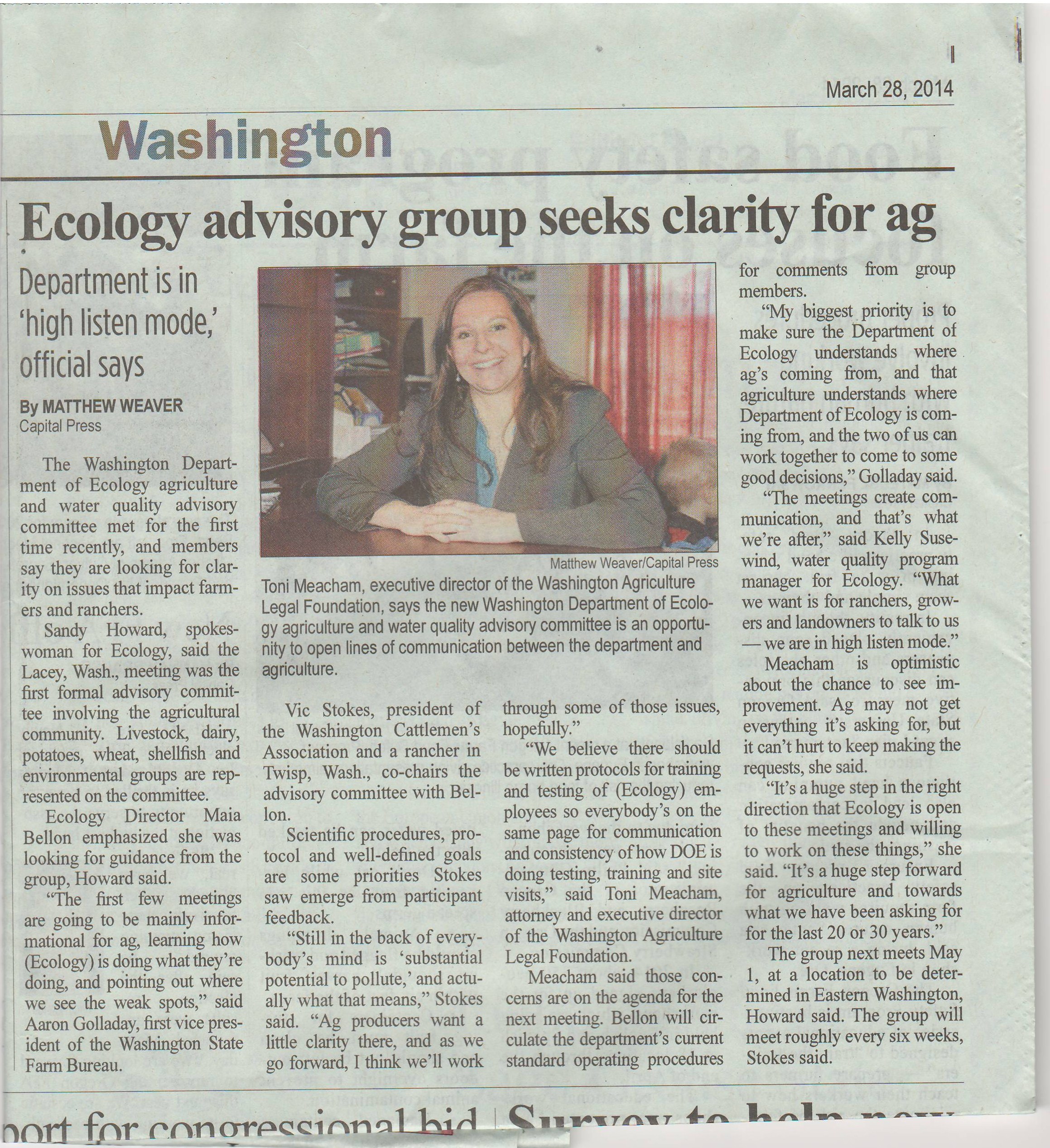
I am pleased to announce that WCA has named me as their lead for the DOE Ag Water Quality work group. I will attend the first meeting on March 19.
 Toni Meacham Attorney At Law