Piece Rate Pay Washington Supreme Court Decision

Detailed guidance from Kristin Ferrera at Jeffers, Danielson, Sonn, & Awylard, P.S. regarding how to handle the extra pay for piece rate issue can be accessed by clicking on the link below.

JDSA Piece Rate Guidance Memo

It is important to note that this goes into effect July 16, 2015- so make sure you understand what you are required to do with piece rate workers.

From the Washington Farm Bureau:

Washington Supreme Court rules on piece rate case

Today the Washington Supreme Court ruled that farm workers paid on piece rate must be paid separately for rest breaks. The court was asked to rule on two certified questions arising from a class action lawsuit, Demetrio v. Sakuma Bros. Farms, pending in federal district court.

The first question was whether an agricultural employer must separately pay piece-rate workers for the rest breaks to which they are entitled. The court interpreted state law requiring rest breaks be “on the employer’s time.” The court said, “The plain and ordinary meaning of this phrase is clear: employers must pay agricultural employees during their 10-minute breaks.” In doing so, the court rejected the argument that the piece rate was intended to account for rest breaks.

The second question was how must agricultural employers calculate the rate of pay for the rest break time for piece-rate workers. The court ruled that piece-rate workers must be paid for rest breaks at either the minimum wage (if piece rate production falls below that threshold) or the piece-rate worker’s regular wage. The regular wage is calculated by totaling the worker’s piece-rate earnings and dividing them by the hours worked, excluding the time for rest breaks.

The court declined to decide whether these changes should be applied retroactively.

The ruling will likely have drastic repercussions throughout all of labor-intensive agriculture in Washington. Washington Farm Bureau will continue to follow the effects of this case and will provide more information as it becomes available.

More WOTUS challenges- WCA through Pacific Legal

After filing objections to the EPA and Corps of Engineers’ proposed “waters of the United States” rule in 2014, Pacific Legal Foundation attorneys have fulfilled their pledge to challenge the rule in court. Yesterday, PLF filed a lawsuit on behalf of several agricultural organizations and property owners because the regulation expands the scope of the Clean Water Act to an unprecedented extent, violating the terms of the Act and the Constitution’s limits on federal authority.

“We are suing to block the administration’s breathtaking attempt to control practically every pond, puddle, and ditch in the country,” stated PLF Principal Attorney M. Reed Hopper in a PLF news release.  “This new regulation is an open-ended license for federal bureaucrats to assert control over nearly all of the nation’s water, and most of the property, from coast to coast.”

The case is Washington Cattlemen’s Association v. U.S. Environmental Protection Agency.

13 states sue over rule giving feds authority on state water

 JAMES MacPHERSON Associated Press
 
BISMARCK, N.D. – Thirteen states led by North Dakota filed a lawsuit Monday challenging an Obama administration rule that gives federal agencies authority to protect some streams, tributaries and wetlands under the Clean Water Act.
North Dakota Attorney General Wayne Stenehjem said the “Waters of the U.S.” rule by the U.S. Environmental Protection Agency and the Army Corps of Engineers is a “federal power grab” that is “unnecessary and unlawful and will do nothing to increase water quality.”
The rule – a response to calls from the U.S. Supreme Court and Congress for the EPA to clarify which smaller waterways are protected – was published in the Federal Register on Monday and takes effect Aug. 28.
According to the EPA, the waters affected would be only those with a “direct and significant” connection to larger bodies of water downstream that are already protected. It says the aim is to protect the waters from pollution and development and to safeguard drinking water.
The EPA did not immediately respond to questions from the Associated Press.
The lawsuit, filed in federal court in Bismarck, asks for the rule to be thrown out. The other states involved are Alaska, Arizona, Arkansas, Colorado, Idaho, Missouri, Montana, Nebraska, New Mexico, Nevada, South Dakota and Wyoming.
Republicans in Congress, and some Democrats including North Dakota Sen. Heidi Heitkamp, also have backed legislation to block the rules.
Stenehjem told reporters that the rule “illegally” gives authority to the EPA and the Corps and will add “red tape and other obstacles” to farmers, ranchers and landowners. Failure to get permits under the new rules will result in “steep penalties and even jail time,” he said.
He said farmers and other landowners could be subjected to federal oversight for even dry ditches on their land. The thousands of small ponds in the Upper Midwest known as prairie potholes also will be regulated, he said.
Stenehjem said North Dakota took the lead on the lawsuit because of its large agricultural sector, “so it just seemed like a logical place.”

USCA Disappointed On Administration’s Path Forward with Brazil, Argentina

USCA (June 30, 2015) – The United States Cattlemen’s Association issued the following statement on the announcement made by the U.S. Department of Agriculture Animal Plant Health Inspection Service (USDA-APHIS) to allow for importations of fresh beef products into the United States from regions in South America.  The following may be attributed to USCA President Danni Beer:
“Once again, we are faced with an issue that has the potential to severely threaten the health and safety standards of the US cattle herd.  We acknowledge the effort and work put in by APHIS staff on this issue, however, the proposed plan to move this notice forward is deeply concerning to producers across the country.  Concerns have repeatedly been relayed from industry groups to the Administration on this proposed change in trade and we are disappointed that the choice has been made to move forward with the plan. ”
“Any opening of the U.S. market to the stated regions in South America is a step-back for the health of the US cattle herd.  However, this issue stems not only from concerns regarding our domestic herd, but also to the political ramifications such a change in trade with this region would signal.  Through this announcement, the U.S. would be rewarding countries that are proven bad actors in the international trade arena.”
“USCA recognizes the risk assessments completed and science being used by USDA-APHIS within the proposed processing facilities and supply chains in the specified regions.  However, we simply do not trust Brazil and Argentina to implement the necessary protocol and safe handling practices on a consistent and comprehensive basis across all supply lines to ensure the safety of those fresh beef products shipped to the U.S.  The margin of error when addressing Foot and Mouth Disease (FMD) is extremely slim, every precaution and necessary safeguard must be in place to ensure safe handling and transportation of product; we remain unconvinced of Brazil and Argentina’s commitment to this process based on their ongoing actions in the international trade arena.”
“Brazil continues to file cases against the U.S. and our trading partners at the World Trade Organization (WTO), Argentina is still in default on its substantial debt to the U.S.; why we would reward such actions by allowing for the import of their products to the U.S. is of utmost concern to producers across the country.”
“The precedent set by this announcement is troubling.  This issue, while rooted in the realm of animal health, will be impacted by outside factors as well.  The political influences that will come into play must not be ignored and rather addressed as a component of this rule.  Our concerns on this proposed notice were relayed to USDA-APHIS during the recent USCA summer fly-in to Washington, D.C. and we will continue to work with those in Congress and the Administration to address producer and industry concerns.”

###
Established in March 2007, USCA is committed to concentrating its efforts in Washington, D.C. to enhance and expand the cattle industry’s voice on Capitol Hill.  USCA has a full-time presence in Washington, giving cattle producers across the country a strong influence on policy development.  For more information go to www.uscattlemen.org

UPDATE ON NORTHWEST ENVIRONMENTAL ADVOCATES V. EPA

On June 18, 2015 before Federal Judge Ricardo Martinez the argument to dismiss the case ofNorthwest Environmental Advocates was heard. Jack, Amber, and Toni went over to Seattle as WCA is an intervenor in the case.  WCA has hired Western Resource Legal Clinic, a pro bono clinic based out of Lewis and Clark, to represent them in this case.

     This case was brought by Northwest Environmental Advocates to force the EPA to look to the ESA to protect listed fish species under the Clean Water Act (CWA). The CWA is just that, to protect clean water, not fish habitat. The CWA, at this time, does not have a component to protect listed fish species.  Both Timber and WCA have intervened on behalf of EPA, so both intervenors had the chance for argument on June 18, 2015.
    From a legal standpoint a motion to dismiss is hard to win as it does not take into consideration the merits of the case, only procedural issues. If there are any issues that cannot be dismissed outright, then the case continues. EPA argued that the case could not continue because Northwest Environmental Advocates has not brought their case in a timely manner and the statute of limitations has run on their claims. Timber and WCA argued that Northwest Environmental Advocates did not bring claims which could be heard before the Court as the Court had previously ruled, in similar type cases, that the CWA does not require the EPA to protect fish species. Both intervenors argued case law, and WRLC, on behalf of WCA, also argued the logistics of trying to combine ESA into the CWA. The time frames alone for both to be considered do not mesh. Northwest Environmental Advocates argued that nonpoint source pollution is not being controlled by EPA  and poses a huge risk to fish species if these fish are not considered under the CWA. The main argument for Northwest Environmental Advocates was if EPA does not consider ESA listed fish species when enforcing the CWA, EPA could potentially approve water quality standards that could kill fish. WRLC argued that the CWA is to protect clean water, the ESA is to protect listed fish species, they are not related documents and cannot be combined at the whim of Northwest Environmental Advocates.
   WRLC did a fantastic job on behalf of WCA. The Judge took all arguments under advisement and will rule at a later date. Federal Court has strict case schedules so the ruling should come quickly to allow the parties to stay on schedule with the next round of briefing.

WCA Board Meeting

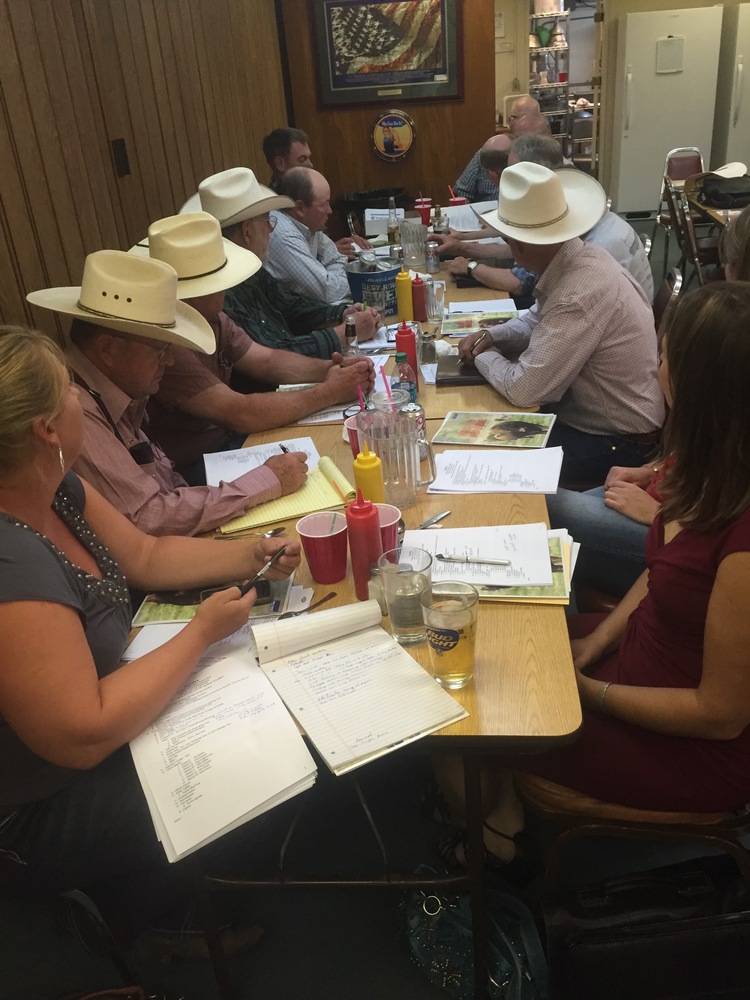
There was a great turnout tonight at the WCA Executive board meeting. A number of issues were discussed, including the brand program revenue,  ADT, Sage Grouse and much much more.  Go to Jack’s blog to see more. http://www.washingtoncattlemen.org/jacks-blog/

JuneWCAboardmeeting

NW Environmental Advocates vs EPA case

I am headed to federal court in Seattle with jack and amber as wca are intervenor in the nw environmental advocates vs EPA case on behalf of EPA regarding their ability to enforce the clean water act to protect fish listed under ESA.

Thumbnail Thumbnail1

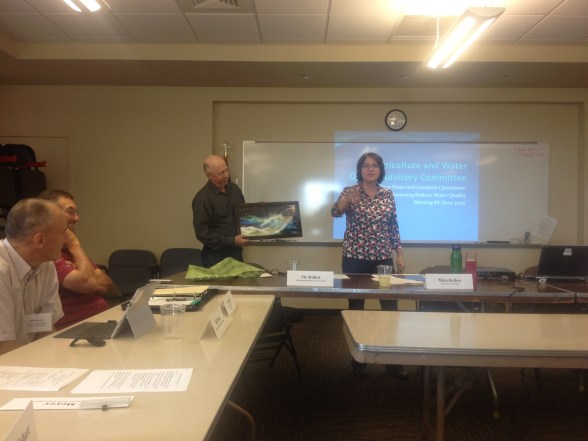
AG & WATER QUALITY ADVISORY COMMITTEE MEETING


Meeting Minutes

June 4, 2015 – 1:00 pm

With standing room only, every seat in the room filled, the regular meeting of the AG & WATER QUALITY ADVISORY COMMITTEE MEETING was called to order on June 4, 2015 – 1:00 pm in Sprague, WA.  Vic began the meeting as Co-Chair, but let the body of the committee know that this was his last meeting as chair; Aaron Goliday ended the meeting as the new Co-Chair.

Subcommittee Guidance Document:

Exclusion is not the only way to reach goals, but it is the suggested method by DOE.  The word “fence” was removed from the document.  Tribal interests have not engaged on the document so it may be pushed back.

The document will be sent out to anyone interested, as well as the staff.  It will also go out on the web as we want as much distribution as possible.

Note that this is a living document allowing for change.

Ecology’s Watershed Evaluations:

The Evaluations took place March 16 – 25, 2015.  DOE identified 262 sites as “concerned”, with a varied range of severity.  We will be sending out 20 letters as a result and 10 thank you letters will also be sent out.  In checking with CD’s, it was determined that 16 letters are to be sent out directly to the producers.  Templates of these letters will be on the website.

Approximately 24 dozen tillage sites were identified as concerning to DOE, included some construction, as well as some dredge site activity.

There is a 60-day window to get the findings out after the evaluation process.  DOE missed the timing this year to be able to present the first group to the DOE.  The letters will be more specific on the issues.

Also accomplished were 3 public workshops held, 8 meetings with CD’s, a blog, CD newsletters written, ecology website updated, A CD-hosted workshop was held in Asotin in February of this year.  DOE is planning follow-up workshops for early July 2015.

DOE information on the website provides the public with data.  Improved recordkeeping, increased efficiency and faster response time is necessary and possible due to the mobility of technology.  Mobile GIS research is to include base map, photos, field data, bread-crumb-trail, example BMP site, evaluation area, etc.  Not included are names, address, phone numbers, parcel data, email address and follow-up data from DOE. WCA did not support having all of this information on the website. Although this information is accessible to the public through freedom of information, WCA has taken the position that only some of this information should be on the website as pictures are a snapshot in time and may not reflect what sites currently look like. Anyone that wants that information should have to request it.

Updates:  In the CAFO permitting development, DOE will consider the Consent Decree entered in the Yakima Dairy case litigation as the consent decree has what DOE considers to be some positive points.  Comments on the non-point source update were due this month – June 5th.  WCA submitted excellent comments that were drafted by our intern then firmed up prior to submission.

The Clean Samish Initiative has stalled; stakeholders decided to do a 90-day push to make some progress.

WOTUS: DOE does not think that EPA jurisdiction really changes and will maintain business as usual.  The EPA has not been specific, but DOE feels that the 296 pages does not really change how Washington will govern the permitting process and overseeing of federal waters in Washington. WCA does not agree with this stance, but needs to take the wait and see approach. Clearly with the expanded definition of Waters of the US including connectivity, the jurisdiction of the Federal government is in fact expanded and this is not a positive for landowners.

NRCS – The natural water quality initiative.  Funding watershed improvements is mostly lagoon issues, but could eventually impact ranchers.

Round Table Discussion:

All DOE Advisory Group members were asked to participate and come up with issues for the next meeting. WCA, through Toni and Jack, added to the discussion regarding the fact that investigations are complaint driven and anonymous in nature for DOE and that needs to be explored on how DOE deals with these complaints. Many landowners are being targeted using this complaint process. This process needs to be fair, equitable, and transparent in nature and not a tool to try and get neighbors in trouble with DOE.

Best management is by principle not practice and DOE needs to stick to guidance and allowing landowners to have tools available to rectify any problems, not mandate how to solve problems. Director Bellon did state that she will not mandate no-till farming which was a relief to many people in the audience.

The Northwest Environmental Advocates vs. EPA is June 18th.

Next Meeting:  The next meeting be held in Yakima.

KetchPen1