Quick reminder to landowners, WOTUS (Waters of the US) is a land grab by the Feds. PLEASE comment! Comments are due this month. You can turn in as many as you want. We are hoping for 30,000 comments from WA. The NCBA has a format that makes commenting easy.
http://cqrcengage.com/beefusa/water
Author Archives
Wolf Shot in Whitman County
On Sunday, October 12, Washington Department of Fish and Wildlife (WDFW) Officers received reports from Whitman County that a wolf had been shot southwest of Pullman. When our officers reached the scene, they determined that the wolf had been shot by a farmer who had pursued the animal for several miles in his vehicle after seeing it near his farm.
The incident occurred west of U.S. Highway 195. This area is in the Eastern Washington recovery zone, where wolves are delisted under federal law but remain listed as endangered under state rule.
WDFW Officers contacted the farmer, and a witness who believed a possible poaching incident had occurred. The shooting does not appear to have been associated with a defense-of-life action, nor did it take place under the statutory authority to shoot and kill a wolf that is caught in the act of attacking livestock in the Eastern Washington recovery zone.
We are actively investigating this incident and are in contact with Whitman County law enforcement officials and the county commissioners. Once the investigation is complete, the case will be sent to the Whitman County Prosecutor’s office for a charging decision.
Lawsuit against Yakima Valley dairies expands
yakimaherald.com
A lawsuit alleging groundwater pollution by four Lower Valley dairies has expanded potential liability beyond the dairy corporations to related entities and individuals owning property used by the dairies. A federal judge Friday allowed environmentalists to add one individual and several companies as defendants in the case that accuses… the dairies of allowing cow manure to contaminate groundwater with nitrates, phosphorus, heavy metals and pharmaceuticals.
The dairies’ attorneys argued that the environmental groups waited too long to add new defendants and risked delaying the trial, but the judge disagreed, according to court documents.
“It is a bit frustrating that plaintiffs – particularly at this late stage of the proceedings – are continuing to make procedural moves that unnecessarily cause delay and increase costs,” Debora Kristensen, the Boise, Idaho, attorney who represents the dairies, said in an emailed response to questions Monday afternoon.
DOE Agriculture and Water Quality Advisory Committee meeting September 11, 2014
The DOE Advisory Group continues to meet. This time we were able to meet in Ritzville, which makes a much easier drive for those of us in Eastern Washington. The next meeting, which will be in October, will be in Lacey. All meetings are from 1-4 for anyone that wants to attend.
The focus of this meeting were voluntary measures and the progress towards clean water that voluntary programs have accomplished.
The first one, Voluntary Stewardship Programs (VSP), are on many people’s minds with the bill that was passed in Washington which allows for VSP if funding can be found. The Conservation Commission will be asking for $7.5 million dollars to fund VSP from the capitol budget in the next session. If funding is not available by July 31, 2015, Counties without funding will not be allowed into VSP. Currently 28 counties have opted in for VSP programs, but only 2 counties, Chelan and Thurston have been funded. The purpose of VSP is to protect critical areas. VSP allows for collaborative stewardship planning between Counties, stakeholders, and other government entities. Once VSP is funded, Counties will be required to come up with a work plan within the watershed group. Improved compliance with laws leads to improved water quality. Although VSP was not passed to specifically address water quality, water quality improvement is an added benefit to the VSP program. DOE supports VSP.
The Direct Seed group also presented on their certification program which is called the Farmed Smart Certification. This program was developed to address water quality issues in farming practices. The Direct Seed group has criteria to become certified and is working with DOE on this program. Once in the program, there will be third party certification and audits to confirm compliance. Buffer strips will be required eventually and in this program, at least at this time, no grazing is allowed on the buffer strips.
For many years Memorandums of Understanding (MOU) or Memorandums of Agreement (MOA) have been used between DOE and different groups, such as Conservation Districts, in an effort to assist with water quality. DOE and the Conservation Districts signed an MOU in approximately 1990 which helped to define rolls. MOU’s are hard with diversity in Washington and DOE does not think a general MOU concerning water quality will work to rectify all water quality issues in Washington.
The Conservation Commission presented on Ecosystem Markets for ag lands. In this scenario, for the market to be successful, a value is applied to various ecosystem functions, such as wetland, forests, habitat, etc. Value is then converted to credits which can be sold in the marketplace. Buyers can be private or public sector . These buyers are mitigating the impacts of their actions by buying up credits from a business or individual that has gone beyond the threshold for conservation practices. The example given at the meeting was if Walmart wanted to put a store in a wetland, then they would have to buy wetland credits from someone with those credits. The goal of the conservation market program is to provide a source of revenue for working farms and forest landowners. The property owner has a bundle of property rights and ecosystem values that can equate to credits. The higher value is in the multi-credit bundles such as one bundle which contains aquatic habitat, carbon, wetlands, nitrogren, and terrestrial habitat. Oregon has a focus on conservation markets. This is what the carbon credit idea is based on.
Our last presentation was on effective voluntary incentive based programs such as through the conservation districts. These programs have been working for over 70 years to help ag producers and landowners make land and water quality decisions. Examples of these programs include: Fish passage barrier removal, irrigation efficiency programs, riparian forest buffer programs (CREP), and wetland enhancement/restoration. The benefits of these programs include increased irrigation efficiency, fish, wildlife, and bird habitat, and increased water quality. Landowners are able to work with the Conservation Districts, allowing them to save money, time, and energy. The Conservation Districts have the tools to bring in the project managers and work to make the projects run smoothly for the landowners.
This meeting did not allow for debate or conversation, and was more of an informative meeting. The advisory group felt it was necessary to present to DOE the success stories that we have in agriculture. Our story is one of stewardship and perseverance. Those of us involved in farming and ranching are not taking the easy route and are not in it for the fast buck. We are in for the long haul and it is time that we show the world the care we give to our land that allows it to produce and perform. Taking care of the land and livestock is what we in agriculture do best, and learning new ways to do that is important. However, economic viability, which also equates to the buzz word of sustainability, is imperative, and must not be overlooked. Agriculture must be allowed to thrive in Washington, and it is our job on the DOE advisory group to try and make that happen.
Change in water-quality standards will affect jobs, families
Here is an exert from Sen. Mark Schoesler’s newsletter about water quality aka fish consumption.
Change in water-quality standards will affect jobs, families
Around Olympia it’s referred to as “fish consumption,” but the issue is really about the updating of water-quality standards across our state. The nickname comes from the fact that these standards – which regulate the type and amount of substances that are allowed to enter the state’s waters – are based in part on the amount of fish people consume.
These standards stem from the Clean Water Act, which involves the federal government (Environmental Protection Agency), and they must be reviewed every three years. Governor Inslee and the state Department of Ecology are on the hook to propose an update, and many government officials, employers and labor representatives are watching. They know water quality means water treatment, and water treatment costs money (think of all the communities that have wastewater treatment plants), and that means higher costs for employers and consumers.
Several organized-labor representatives gathered at the Capitol recently to offer warnings about where this could be headed. While the governor’s own communications director wondered what all the concern was about, (as reported here) I understand and agreed that labor is right to jump into the discussion (click here for my statement).
The Farm Bureau Legal Foundation
The Farm Bureau Legal Foundation is another board that I sit on. It is made up of great people dedicated to the preservation of agriculture. Right now with everything that agriculture is facing, it is a hard job.
Here are a couple of pictures I received from a friend when I spoke at Mid-Year. Pictured with me is Elizabeth Howard, an attorney from Oregon.
Mid-Year Conference
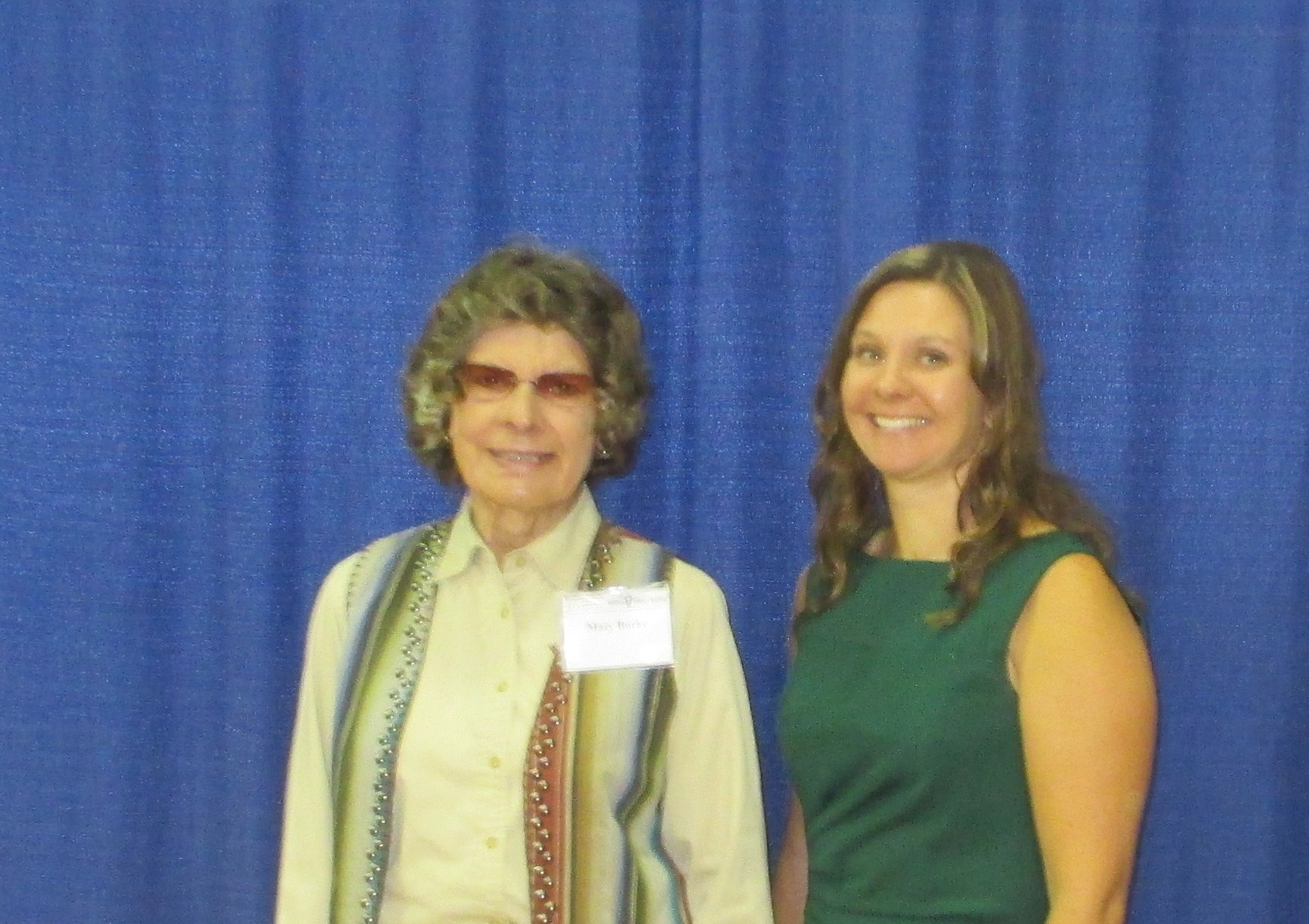
The Mid-Year Conference was excellent. My speech was well received and I had the opportunity to get a picture with my long time mentor, Mary Burke. Mary currently lives in OR but has been my mentor for many years. She was the first, and so far only, female Washington Cattlemen’s President, and is a self taught water historian. Aunt Mary has always encouraged me to pursue my dreams and to become an attorney.
Wills and Estate Planning

Estate planning is for everyone. While most people do not like to think about death, it is a reality and typically unplanned. It is a lot easier on everyone, especially if you have a spouse, children and/or any relatives, if you draw up your own will and testament. I have been posted lots of information on estate planning, they should answer most of your questions. When you are ready to plan your estate give me a call and we will get started.
Laws on Probate in Washington State
Don’t put your head in the sand, get your estate planned.
Washington law does NOT require a probate proceeding to be filed following death, regardless of whether the Decedent died with or without a Will (ie testate or intestate, respectively). Probate in Washington is entirely discretionary, and probably only a few percent of deaths in Washington result in a probate being filed. In Washington, if a probate is filed, it is because someone wants it to be filed, NOT because the law requires it. By far, the most common reason for probate is that the Decedent died holding:
- Any real property titled in his or her own name, or
- Personal property (usually a cash or securities account) titled in his or her own name whose value exceeds $100,000.
- There are other reasons, but the two listed above are the main ones.
Washington law, however, does require any last Will of a Washington resident Decedent to be filed promptly following death. RCW 11.20.010 requires any person having the custody or control of any will to file said will within thirty days after he or she shall have received knowledge of the death of the testator.
Estate Planning with a Trust
In a general sense, a trust is nothing more than an arrangement whereby one person agrees to hold property for the benefit of another. A “testamentary trust” is a trust created under a Last Will and Testament. As such, a testamentary trust becomes effective only after the testator’s death and, even then, the will must be approved and admitted to probate.
A “living trust,” is a trust created during the grantor’s lifetime, and the trust becomes effective immediately upon its creation. Living trusts are created by a written instrument, called a “trust instrument.” If the grantor is also the sole trustee, then the trust instrument is called a “declaration of trust,” because the grantor simply declares his or her intentions to the world. However, if someone other than the grantor is a trustee, then the trust instrument becomes a “trust agreement,” because the grantor and the trustee must agree on the terms of the trust.
Since living trusts are created during one’s lifetime, they can be either revocable or irrevocable. A “revocable trust” or “revocable living trust” is one that can be amended or changed, or even terminated, during the grantor’s lifetime. In almost all cases, it is the grantor who reserves this right when the trust is created. Even so, the trust becomes irrevocable upon the grantor’s death because only the grantor retains the right to amend or terminate the trust.
An “irrevocable trust” or “irrevocable living trust” is one that cannot be amended or changed, or even terminated, during the grantor’s lifetime. Once created, an irrevocable trust is governed exclusively by the terms of the trust instrument without any control by the grantor. For this reason, irrevocable trusts are created almost exclusively to obtain favorable income tax and/or estate tax benefits for the grantor.
Revocable Living Trust (RLT) are for the purposes of avoiding probate in Washington State, as well as making sure that assets are protected during life, protecting assets for certain beneficiaries, reducing estate taxes, avoiding will contests, etc. A RLT will only govern assets that are held in the trust or that are conveyed to it. This means that assets held in an individual name will be governed by the Last Will and Testament of the deceased. A pour-over Will will govern the assets and those assets will still be subject to probate, even though the RLT will govern their distribution. For a Trust to work, there must be a Will and and a funded RLT.